Showing posts with label Building Information Modeling. Show all posts

Saturday, September 1, 2018

Towards Facility Information Modelling (FIM)

Over recent decades, building information experts have repeatedly faced an aggravating question: How can BIM benefits be attained retrospectively for existing facilities?

3D-scanning of legacy facilities and enriching the resulted models with the required information is one of the most viable solutions.

In 2015, SISAB adopted 3D-scanning as a modern alternative for traditional point-to-point measurement methods. Our legacy facilities are often scanned prior to reconstruction and extension projects when existing documentation is not of the desired quality. Examples of such insufficient documentations are TIFF drawings retrieved from paper sheets or DWG drawings that do not reflect the latest alterations.

Our common routine for 3D-scanning is placing a stationary lidar scanner containing laser triangulation sensors at several spots inside and outside the building. The resulting point clouds are then integrated into one using reference points. The captured point clouds could be alternatively draped by an RGB texture map for adding a realistic touch for virtual navigation and investigation purposes.

Point cloud of a sports hall located in
Bäckehagen school in Stockholm
Initially, we also procured BIM models (often in Revit) produced out of the captured point clouds. The BIM-modelling and objectifying work was done through manual and semi-automatic methods by scanning firms. Later on, however, based on the feedback from our architectural firms, we concluded that the BIM models produced by the scanning firms were often not fully appropriate for design workflows. Architects would rather import the raw point cloud (often in RCP format) directly into their BIM applications as a background framework and model old and new components as they wish and with their preferred level of detail.

Earlier this year in January, I presented a brief account of our 3D-scanning praxis as clarified above for our experts committee at SISAB. I concluded my presentation with few slides on further potentials envisioned by 3D-scanning in production (namely QC/QA) and FM as well as new scanning techniques such as mobile scanning equipment and airborne laser scanners (drones). The committee representatives from our FM department found it interesting and I was thereupon given the opportunity to run another presentation this time for all employees at the FM department. The latter talk covered the broader topic of BIM in FM with a highlighted focus on the potential benefits of the 3D-scanned building models for increasing efficiency in FM.

Emil Nielsen from BIMobject runs the Matterport scanner
At the next stage, the internationally-reputed digital content management firm, BIMobject helped us taking a tangible step and scanning one of our day care centers in Stockholm using the recently-developed fast and economic Matterport equipment. I published a brief account of the experiment at my LinkedIn feed a while ago. 

Last week, we held a second workshop on 3D-scanning of existing buildings. In addition to the participants in the first workshop, our FM and operation division managers, Mari Lindén, Rolf Amble and Lars Johansson, our authorities coordinator, Johanna Erlandsson and our BIM experts, Madeleine Lilja and Victor Cabezas were present and indulged in some hands-on experiments including attaching information points to the scanned model and sketching model-aided workflows. The session was rounded up by a quick exchange of reflections and thoughts. 

The second workshop on 3D-scanning
held on 22nd August at SISAB
The participants unanimously believed that our current FM and operation processes could be made more efficient using scanned models of facilities enriched with the required information and linked documents. The case scenarios addressed by the participants ranged from reducing the time for reporting the location and nature of the occurring failures to more accurate area retrieval and more gratifying tasks for employees. The findings could form the ground for further introduction of more efficient FM and operation practises using scanned models at a larger scale at SISAB. Such attempts may turn to be a prelude to the plausible transition from BIM (Building Information Modeling) to FIM (Facility Information Modeling) in the FM sector.

P.S. You can check out and navigate through the scanned model of the daycare center through the link below (no information is attached here):
https://my.matterport.com/show/?m=ZFwKVmp6uzq 

Monday, December 11, 2017

Workshop on Information Management in FM Organizations

It's been slightly more than a year since I took my position as BIM-specialist at SISAB. It was a year full of excitement, joy, genuine insights and intriguing challenges. Taking part in a dozen of projects and receiving loads of daily inquiries and feedback from people involved in creating and using building models and information handover was a an invaluable experience.

Progressing from the clear-cut policy side of BIM to the more arbitrary field of BIM processes revealed a whole new host of both possibilities and problems associated with BIM-implementation. I was though not totally detached from the policy field, rather had a smooth transit from academia to national BIM-networks such as BIM Alliance Sweden. During the last year, I have been involved in a number of working groups of BIM Alliance namely Facility Management, Building Materials, Project Management and Environment & Energy. Parallel to this, I have been participating in a number of R&D Projects within the national strategic program Smart Built Environment. My involvement in networks and projects as such is intended as a contribution to the overall vision of maintaining a seamless flow of information across the entire lifecycle of buildings and infrastructural facilities. At the same time, I strive to bring the collaboratively-formed knowledge in the field back to SISAB and improve our own information modelling and management practice. The ambition level at SISAB for this endeavor is amply high and we have a number of articulate initiatives in progress to realize this.

In February 2018, a one-day workshop preliminarily titled as Information Management in FM Organizations will be held by SISAB. Nationally-renowned experts in the field will gather and contribute to a concentrated brainstorming event in the form of a mix of short talks and round table discussions. The event will be opened by SISAB's CEO, Claes Magnusson, and moderated by the FM business developer and BIM strategist, Lars Lidén from Meta consultants. Senior consultants from such pioneer construction, FM and IT companies as Tyréns, IBM, Sweco and Vasakronan will join in. People from different managerial and technical positions at SISAB and Stockholm Municipality will also be participating. The initial idea for the workshop was conceived by our project and personal coach and my mentor, Stig-Erik Öström.

The talks and discussions will cover both construction and operation phases and span various relevant topics namely BIM and IoT. Narratives of exemplary projects provide substance for discussions around future systems, work flows and organizational setups for an efficient procurement, management and retrieval of facility information as a treasured asset for supporting and optimizing the core businesses of organizations. A number of students from relevant programs will also be present, document round table discussions and contribute with their fresh and innovative ideas.

SISAB's primary mission is producing and maintaining facilities where school kids learn and nurture. At the same time, we genuinely aspire to create forums and platforms where knowledge is created, shared and exploited for the good of the society as a whole.

Source: https://www.thesun.co.uk/wp-content/uploads/2017/11/nintchdbpict000337897903.jpg?strip=all&w=960&quality=100

Tuesday, September 29, 2015

The age of facility managers' paper boxes is yet far from over

The first time I saw the top left image was July 2012 during a keynote speech by Dr. Bill East as part of the ECPPM in Reykjavik. I had then just started my doctoral studies and roughly outlined my research area as lifecycle-support building information management. Through literary sources such as the BIM Handbook, I had already noticed the urge for extending the use of high-end information technologies to the operation phase; but I still had an avid hunger for more insights and indications for finalizing my research topic.

The image at the top left shows a room where FM documents are stored - in a hospital if I remember correctly. The image conveys an uncomfortable reality about the status quo in the facility management sector: the information required for operating buildings and planning and executing maintenance tasks often needs to be dug out of piles of blueprints, brochures, manuals and contractual documents stacked in some shabby obscure room. The gist of Dr. East's talk was to unravel how inefficient, error-pone, sluggish and counterproductive this prevailing practice of information management is and a suggested approach to turn the tide.

In my first paper, 'Is the age of facility manager's paper boxes over?', the problem was addressed in detail, an alternative solution (FM:BIM) was disclosed through literature, and the major categories of obstacles to be lifted to truly leverage BIM for a more efficient FM&O sector were designated.

Since then, I have been constantly monitoring the subject area to ascertain the relevance of my research goal and gauge the possible need for updating or modifying the overall set up. Through hours of talks and discussions with professionals of different positions in both fields of FM&O and construction IT, attending seminars and observing practitioners, I can confidently conclude that the problem still prevails - even in such an IT-friendly country as Sweden.

The picture in the middle shows the construction drawings and operation documents of the condominium where I live, freshly handed over from the construction company to the facility management firm! All documents are, of course, accompanied with their counterparts in digital format; but these are the paper versions that are legally binding and will be used for daily operation activities. Moreover, the digital hand-over documents are, in the best case, PDF files and no original model or drawing in either proprietary or neutral format has been included; apparently because no such requirement exists in contractual documents which, in turn, is a result of lack of national legislations on digital hand-over requirements.

The strategic document 'BIM i staten' which has been procured by five Swedish public organizations and provides guidelines for open-standard information management in the AECO industry and other initiatives from BIM Alliance Sweden gradually paves the ground for filling the legal gaps mentioned above.

I took the picture to the top right the other day upon entering the pool where I usually swim. One of the staff was carrying a number of maintenance folders to the storage room in the basement. Apparently, the handover documents in paper format were still in use as the primary source of information for running the facility! In fact, FM&O information is currently stored in a broad range of formats as depicted in the diagram below ranging from blueprints and paper folders to cloud-based object-oriented repositories. The majority of FM&O firms are, nonetheless, still using the rudimentary formats that are demonstrated towards the left end of the diagram below.
Spectrum of forms and formats of FM&O information (Parsanezhad, 2014)
Technologies such as 3D-scanning could help speeding up the process of creating BIMs for older buildings or upgrading old-format legacy documents to more semantically-rich building drawings, models and databases. My third paper is, in fact, a critical reflection on one of such efforts (though not using 3D-scanning) for creating BIMs for pre-BIM facilities. The co-author was Johannes Dimyadi who I was lucky to bump into during WBC2013 in Brisbane. We described and analyzed the case of developing BIMs of 191 campus buildings in Auckland over 4 years. The models had then been coupled with a centralized database in an SQL DBMS and a number of APIs through a portal solution and deployed for optimizing their FM&O activities. I presented the work at CIB-W070 in Copenhagen last year.

¤¤¤¤¤¤¤

Keeping to my recent blogging tradition, below comes some anecdotes of the events I have lately attended:

23rd September - During our last departmental lunch seminar, Professor Hans Lind presented his recent paper on merits of vertical integration in the real estate sector. The term 'vertical integration' originates from the literature in industrial organization and refers to integrating complementary services into the core business activities of firms. The other alternative is outsourcing or buying in such services when necessary. Through this research, a number of theoretical propositions had been tested within four real estate firms in Sweden. Construction, acquisition, selling and operating facilities were the core and complementary business fields of the selected cases.

According to the literature, some examples of the rationales for vertical integration are: preserving the quality of services and products, entering the retail market, enacting more control over input resources and protecting corporational information. As an example, facility owners who also operate their buildings possess more bargaining power when renting out their properties and are less prone to making incorrect decisions such as selling their assets at the wrong time or at a low price. All in all, vertical integration provides firms with additional options. One common feature is that vertical integration increases bargaining power in markets with limited competition.

22nd September - An exhibition of the works by the students of architecture in Master Studio 4 at KTH was held at the new School of Architecture building designed by Tham & Videgård architects. The title for the exhibition was 'Another Earth' connoting temporary architecture for our future society. For me, it was also a good opportunity to take a look inside the new building which vividly stands out in the campus with its curvy façade comprising pre-oxidized rust-red corten plates and huge glass panes.

20th September - The Swedish Transport Administration (Trafikverket) had organized a public visit to their railroad bridge project as part of the new commuter train line in Stockholm. Citybanan is 6 kilometers long and stretches north-south, passing through the city center. The project will be completed by 2017. In construction of the Älvsjö bridge, modern techniques such as movable scaffolding system (MSC) have been implemented.

16th-17th September - Stockholm Business Arena was held at Stockholm Waterfront Congress Centre. The event includes tens of lectures and debate sessions on construction and regional and urban planning. Off to the side of the event, major actors in the field present their services at the venue. Due to other occupations at school, I only managed to be there half a day. Yet, I had intriguing discussions with representatives of architectural, construction, FM and real estate companies and attended a few sessions on smart cities, infrastructure and residential architecture.
Right to left: Fredrik Brunes, Inga-Lill Söderberg and me

9th September , morning - As part of the breakfast seminar series organized by the Swedish Association of Architects, Michael Kazarnowiczs gave a speech on how social media could be deployed efficiently and professionally by architectural firms. 'Contents', 'algorithms' and 'people' were emphasized as the pillars of social media platforms where content is the fuel, algorithms are the catalysts and people are the engine. Different media employ different algorithms for customizing the contents. That of Facebook, for instance, customizes each individual user's interface according to her/his interests, previous posts, interest in the creator of the content, content type and recency of the post i.e. News Feed Visibility=IxPxCxTxR.

In Sweden, people at the age of 16 to 25 use the Internet the most. The highest number of Swedish Facebook users belong to the same age interval of 16-25; while the majority of Instagram users through the country are 12 to 15 years old.

9th September, evening - The seminar on virtual design and construction (VDC) was held at KTH. The organizer was the construction firm, Veidekke, and the main speaker of the event was professor Marin Fischer from Stanford University. He presented the basic principles of the Integrated Concurrent Engineering (ICE) method as part of the Virtual Design and Construction (VDC) methodology. A number of case studies were presented where implementing ICE had resulted in significant reduction of work orders and RFIs (request for information) and budget and time efficiencies.

Advocates of the VDC methodology regard BIM as just one single component of their more comprehensive solution which is formulated and practiced at a higher strategic level than BIM. This battle of terms reminds me of how researchers and practitioners in the field of 'adaptation' consider those affiliated with the domain of 'resilience' lacking strategic insight. While BIM is more tangible for designers and engineers, VDC sounds more intriguing and relevant for project managers. Both concepts could be developed further to also embrace the needs of the actors in the operation phase; whereas the term VDC needs to be rephrased to VDCO (virtual design, construction and operation) for this purpose.

P.s. I just discovered that an adept Florida-based team has already started using the updated term, VDCO! I got to know Birgitta Foster firstly through a former student of her, Francisco Forns‐Samso, whom I met at ECPPM 2012 in Reykjavik. Since I found Francisco's thesis an interesting piece of work, I reached Birgitta via a Skype interview in 2012. I also got the opportunity to meet and talk to her during the international BIM conference by BIM Alliance Sweden in 2014. She is a very passionate, charming, energetic and accommodating person with great ideas!

3rd September - Petra Blaisse, the textile designer and landscape architect, presented some of the works designed in their office ranging from interior projects to park designs in Qatar, the Netherlands, Taiwan, Italy, Germany, etc. 'Two eventful years' had been organized by the Swedish Association of Architects and held at the Royal Academy of Fine Arts. Elaborate use of forms and materials characterizes their work being surrounded by either an individual fully-designed structure or a large-scale urban district.

20th-21st August - Our departmental research and education seminar was held in a conference venue located to the west of Stockholm. Coordination of educational programs at our department, gender equality and pedagogic concerns were the central themes for the event. The corporational vision of the Department of Real Estate and Construction Management at KTH comprises research for a sustainable society, excellent engineering education, and collaboration with industry and society. Research at our department is linked to both policy and practice and covers a wide range of subject areas, namely, urban development, property/facility management, production and logistics.

Friday, January 2, 2015

2014 - Miscellaneous

Due to the workload for the course I was engaged in and some other parallel activities during recent months, there was no time left for more posts on this blog. When I went through my archive this evening, I learned that a handful of drafts from the events in 2014 had not got the chance to be developed into organized texts. Some of the contents have though lost their currency now. Besides, it would not be feasible to work out all those items at this moment. Yet, those events of the 2014 that were supposed to be discussed here are shortlisted in this openning post of the year 2015 in a reverse chronological order:
Poster session at SB14,
photo by Professor Keith Hampson

10/12/2014
During the last lunch seminar of the year at our department, Professor Hans Lind clarified the idea behind an upcoming research work of him and some other coleagues. The central arguement introduced by him was that shifting from public to private procurement in construction projects would alleviate the issues with moral hazards. Generally speaking, diminishing moral hazards could be interpreted as eliminating the incentives for not getting the things done in the way that they are supposed to be done by different parts of a contract.

1/12/2014 - 3/12/2014
I participated in a gratifying writing retreat by Professor Christine Räisänen and Dr. Paul W. Chan held at Chalmers University. Common structures of the abstract and the main text, the funnel principle for presenting the research work and the CARS model were some of the topics that were covered by the lecturers.

28/10/2014 - 30/10/2014
During the World Sustainable Building conference (SB14) held in Barcelona, I presented a poster in the afternoon session of the second day.

23/10/2014
Stockholm Business Region Development & Stockholm IT Region organized an intriguing breakfast seminar about Internet of Things (IoT) at cinema Rigoletto in Stockholm. In the final part of the event, a number of startups in the field introduced their products.


20/10/2014
The seminar, 'Insights and prospects' (Utblick & inblick) organized by BIM Alliance Sweden - was held at Clarion conference facilities at Arlanda Airport. In the begining, Dr. Olle Samuelson briefly covered the priorities in BIM-implementation such as introducing best practices, standardizing (setting and promoting standards), engaging all stakeholders, issues with collaboration, BIM education and BIM research. Dr. Rogier Jongeling's brief words about the seminar was then followed by an insightful talk by Dale Sinclair - Director of Technical Practice (in the UK). He, among others, explained the ongoing activities for updating the RIBA Outline Plan of Work and replacing the approximately 30000 existing CAD manuals with a standard national BIM document. As an example of the challenges with engaging stakeholders, he referred to the fact that 80% of the architects in the UK had not seen the Bow-Richard diagram of BIM-maturity levels by the time...

Bow-Richard diagram of BIM-maturity levels 

The kick-off meeting for the detailed design phase of
the project 'Undervisningshuset'

20/10/2014
I had to leave the seminar to join the kick-off meeting for the detailed design phase of the project 'Undervisningshuset' to be built at the main campus of KTH. The meeting was held at Akademiskahus building where the project manager and participating consulting firms discussed the practicalities of the upcoming design phase.

Dr. Antje Junghans (professor in facilities management
at 
NTNU) and me at ECPPM (source)

17/9/2014 - 19/09/2014
The 10th European Conference on Product & Process Modelling (ECPPM) in Vienna was opened by the host and organizer of the event, Professor Ardeshir Mahdavi followed by Professor Ziga Turk. Keynote speakers expressed  their concerns about the need for a closer collaboration between academia and industry for realizing a greater impact by the research community on the society. My contribution to the event was an oral presentation of my latest article 'An overview of information logistics for FM&O business processes'.


https://blogger.googleusercontent.com/img/b/R29vZ2xl/AVvXsEj1PCBxhXb1MzaETuHXki1QDz4JG3Dpo13O-Ih2IHOQudn24HTk0lWILFC9sipHF49XDX3Kg4nJjie-b5BB61i6EWRNjYKeSBPTY7Y-pEij_Qi11F3LsYJYBzhFRzqMDbltOnM100eC2BUi/s1600/010.jpg
KTH delegation at the welcome reception at Kuppelsaal, right to left: Professor Väino Tarandi, Susanna Vass, Tina Karrbom Gustavsson and Hannes Lindblad
https://blogger.googleusercontent.com/img/b/R29vZ2xl/AVvXsEixDo-mueFgLbV5_mAs3_zdZ11j9C9f1J28YoiwikonYGdSgU7Tr4RL2akSJypBmVZSEpjLeuZ4-YM1Y5q7TfJoq8rwieIS0GxZf8P576GTRy_nJDv1enxjYPrzNajMHye0OL1exPq1_x09/s1600/006.jpg
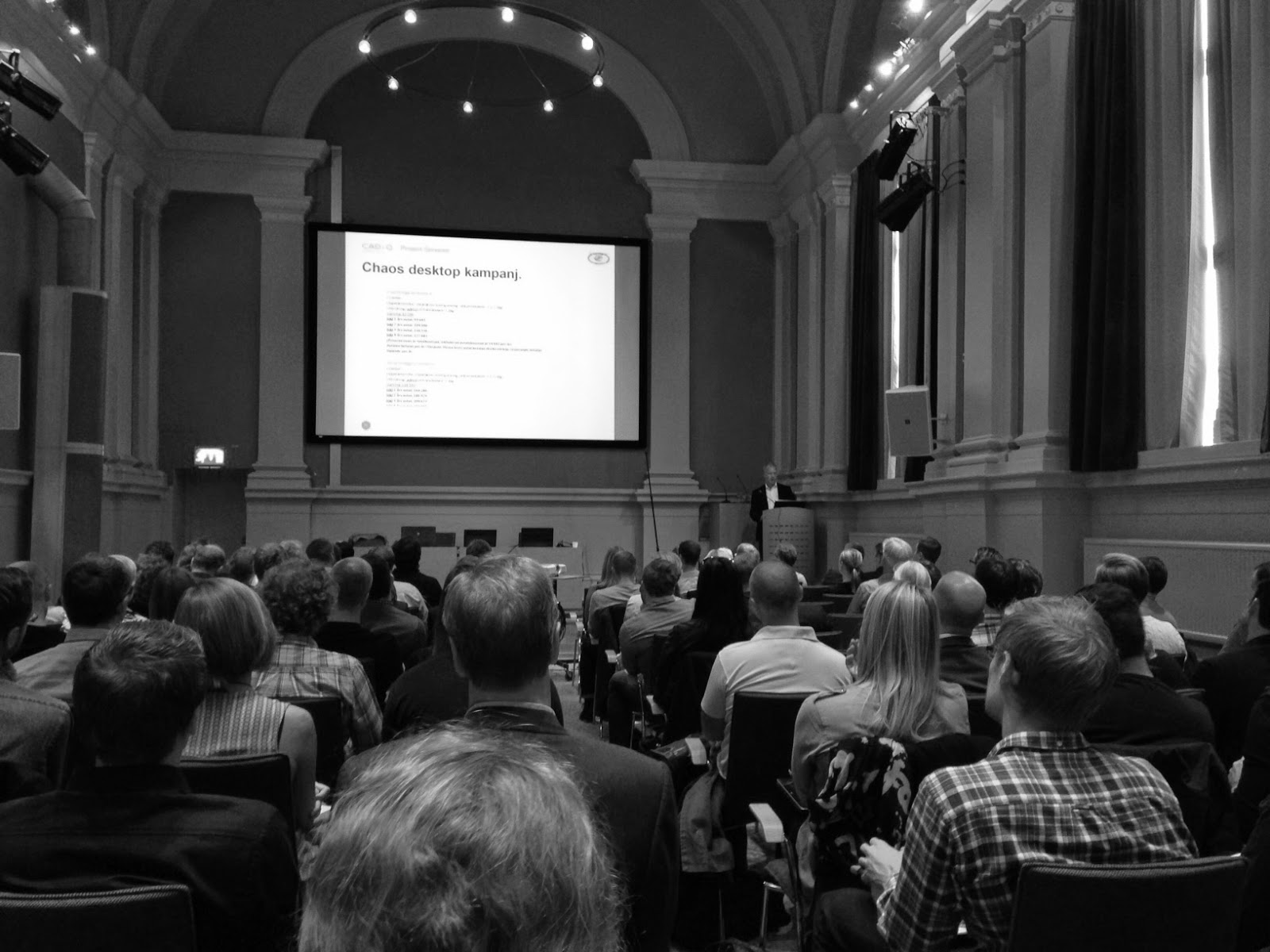
Project Services Forum by Cad-q

11/9/2014
Cad-q introduced their alternative for a lifecycle-support building information management configuration during the Project Services Forum. The seminar was initiated with an account of information management strategies at the sizable construction project of New Karolinska Solna hospital. The following lecturers contemplated on how to coordinate the use of diverse applications for authoring and communicating building infromation e.g. BIMeye, NaviateChaos DesktopInteraxoSimplebim and Lumion.

8/9/2014
School visit by Professor Peter Gudmundson
The president of KTH, Professor Peter Gudmundson made a school visit and talked to the staff. Routines for evaluating the quality of education and research at KTH, environmental certification of KTH campus buildings,
KTH's ranking (among the top ten best European universities and the top 120 universities around the world at the time of the lecture), publishing policies and strategies at KTH, internationalization and E-learning were among the topics raised by him.

12/6/2014
Graphisoft Sweden held the event 'Highlight' at the Royal Academy of Fine Arts (Konstakademin) in Stockholm. Joakim Werning from National Museum explained how he utilized the capicities of the BIM application, ArchiCAD, for scenography of art exhibitions. Creating a virtual collection of the works of arts prior to shiping, examining different arrangements virtually, examining different alternatives for stands, platforms and information texts, lighting design, locating surveilance cameras, extracting quantity take-offs for procurement of materials such as chipboard and gypsum panels and paint were some of the functionalities facilitated by using ArchiCAD, according to Joakim. The talk was followed by a visit to the exhibition.


Design of an art exhibition in ArchiCAD environment
Professor Martin Fischer kindly accepted my request for a selfie
together just before his speech ensuing the conference
20/03/2014
The buildingSMART international conference was held by BIM Alliance Sweden and hosted at KTH. The event was preceded by a number of technical sessions starting on March 16th. Market-based initiatives for operationalizing bsDD, the new concept of FMie (developed in Norway), application of BCF for transferring portions of IFC files, developments of COBie US and UK, implications of different classification systems such as Omniclass and Uniclass, engaging part manufacturers in developing product data templates and fi2-compatible applications such as Solibri were among the topics discussed during the week.

Monday, October 20, 2014

A Building Products Procurement Platform

A while ago, a multi-disciplinary project was initiated at our collaboration lab by scholars from three departments of the School of Architecture and Built Environment (ABE) at KTH: Real Estate and Construction ManagementCivil and Environmental Engineering and Urban Planning and Environment.

This work provides the basis for developing a building products procurement platform for environmental evaluation of design alternatives. The outcome is a ground for implementing existing tools and standards for lifecycle assessment or environmental certification of buildings in the early building design stage.

To realize this, the first phase of the Life-cycle-support Building product Indexing Platform (Lcs-BIP) project was accomplished for a specific use case, procurement, and the corresponding work-flow scheme was depicted. The federated solution introduced for environmental evaluation of design alternatives is composed of prototypes of a web-based tool for procurement of building products and materials (BuildX), coupled with a BIM-enabled platform and data sharing hub (Share-A-space). The system assists users to maintain a trifold focus on competitive price, quality, and environmental performance of the building. The overall workflow of the system was clarified through an exemplar scenario with the three disciplinary roles of an architect, a BIM administrator and a contractor.

I will present the outcomes as a poster (see below) next week at the World SB14 Barcelona Conference. This exemplar approach could be complemented with high-end solutions for BIM-based product libraries so as to provide the design and construction team with maximum flexibility and required knowledge for balancing environmental, economical and functional measures in their proposed design alternatives.


Sunday, August 17, 2014

BIM-Forum


The concluding talk by Prof. Thomas Kalbro
Department of Real Estatae and Construction Management of KTH had its two-day kick-off gathering after the summer on Thursday and Friday last week. The sessions were composed of reports and group discussions on the two main themes of research and education as well as current and expected performance of the department and emerging fields in research and education. The venue was Djurönäset which is located in the far west of Stockholm's archipelago and almost at the verge of Baltic Sea. This was a timely opportunity for exchange of experience and knowledge in a relaxed environment, socializing with others at the department and breeding grounds for more collaboration and synergy in the coming year.

Division wise meeting of Project Communication; right to left:
Hannes Lindblad, Tina Karrbom Gustavsson and Prof. Väino Tarandi
The main motivation for this post is, however, presenting a delayed report on BIM-Forum organized by Cad-Q last May. The event was a thorough complement to an earlier seminar by Cad-Q elaborating on BIM 360 Glue and BIM 360 Field. The seminar was opened by a role play that simulated the building information flow through a complete reconstruction/addition process from the initial requirements management phase to operation. Participants in the demonstration represented different roles in a reconstruction/addition project e.g. the owner and the architect.

The role play simulating the building information flow
through a complete reconstruction/addition process
The point of departure was submitting a request by the owner for access to the drawings of the site and the existing facilities on the site. Currently, drawings are mostly in DWG or raster formats and deposited in digital archives of the FM firms such as HyperDocInteraxo (previously projektnavet) is Cad-Q's new web-based solution for archiving building drawings and models in more intelligent formats; while another product, BIMeye, serves as a requirements repository. BIMeye is composed of a variety of modules such as Door Manager, Room Manager, Audit Trail, etc. A useful functionality in this application - which is also available in other requirements management software such as dRofus - is creation and re-use of semi-standard room types. Customization of existing room types, classification of requirements according to different disciplines and export to popular formats such as Excel are some other functionalities of BIMeye.

The architect then opens the model in his/her BIM authoring software, in this example Revit, and uses the mass-modelling tool to create room objects based on the requirements imported from BIMeye. The newly planned or modified parts and elements of the building are modelled within Revit and exported as IFC through Naviate functionalities. Room objects and other essential parts could, in turn, be imported to MEP applications. Further disciplinary requirements such as heat transfer, glow and light intensity are then imported from BIMeye and added to corresponding building elements. Components are modified when required so as to fulfill the new requirements. The outcome is channeled back to other actors as the base for further development and the design is incrementally formed by all disciplinary actors in an iterative manner.

The BIM coordinator deploys Navite to guarantee that correct information is included in the exported IFC models. Simplebim - which operates in the background of Naviate - also controls for compliance with a host of measures such as availability of required information for energy, ingress and igress analysis, accessibility and other Swedish building codes. Similar to Solibri Model Checker, the results could be reported in a multitude of formats such as PDF, PPT and BCF (BIM Collaboration Format). The BCF file is then sent to relevant actors via email, project's repository or Naviate BCF Manager. New BCF files could be consecutively created and shared.

When the design is finalised, detailed information on new rooms such as wall and floor finishes are registered by BIMeye in the form of searchable Room Data Sheets (RDS) including intelligent fields for different parameters. BIMeye also enables synchronising RDS's with the BIM model and querying the database based on desired values for specific parameters.

In the second session, I participated in the facility management track due to my research interests. The three other tracks were for architects, structural engineers and MEP engineers. Anne Ellingbö provided a brief introduction on Interaxio and its functionalities namely archiving drawings, revision management and administrating the approval procedure. This file repository is in principle comprised of a folder structure. A specific type of folder, called "smart folder", provides some advanced possibilities such as facilitated grouping of files, batch property assignment to files, export to Excel sheets, etc.

The next speaker was Anders Moberg, manager of CAD Quality AB. He briefly presented the latest advances in implementation of BIM for facility management and the state-of-the-art of deploying new tools and technologies for propelling the sector through the consecutive stages of BIM-maturity. Moberg mentioned a number of initiatives throughout Sweden for converting legacy drawings of existing buildings to object-based models and complementing them with techniques such as laser scanning. Projects by Region Skåne, Locum, Fortifikationsverket, Riksdagsförvaltningen and Falu Kommun were among the examples mentioned by Moberg.

The final presentation was an introduction of the new version of HyperDoc. Security measures for acess of different groups of users, versioning at the object and field level, customized views to the central object-based model and the possibility for importing IFC and fi2 files were some of the new features introduced. Even though the FM&O sector has traditionally been lagging behind other actors in the building industry in embracing new information technologies, recent political ambitions and technological advances demonstrate signs of accelerating the progress in the field. Lack of universal standards and mismatch among current FM&O workflow procedures and the ones required for a BIM-based practice are two main obstacles on the way to be tackled.

Tuesday, October 8, 2013

Miscellaneous updates

In this post, I will briefly report on some recent events of different scales in a reverse chronological order:

1.
Magnus Svantegård clarifies how data queries on properties
is facilitated by an integrated web interface
Last Wednesday, Väino, Hannes, and me had a visit to Datscha company who procure information and analytic tools on commercial properties mainly in Sweden.

Magnus Svantegård explained their business plan for gathering, developing, packaging, and fitting data into user-friendly and customer-specific interfaces. Their business is mainly grounded on the demand of the actors in the Swedish real estate market for certified, customized, and easy-to-retrieve data on properties. It was then discussed how knowledge management systems implemented at urban and regional scales could be integrated with their counterparts at building level so as to maintain a holistic approach towards knowledge management of the built environment.

2.
Prof. Väino Tarandi intoduces an effort for extending use of IFC to
urban and regional scale

Last week, one more step was taken towards establishment of BIM Alliance Sweden. OpenBIM's meeting that was held at KTH main campus also included a visit to XPRESS lab and a presentation by us from the BIM Collaboration Lab about our latest research activities and interests. Väino, Örjan, and me briefly showcased two proposed solutions for life-cycle-support, and integrated knowledge management of the built environment:

The first example demonstrated a basic renovation project where the original model of the building was retrieved from an open format BIM repository (Share-A-space) possessing versioning functionality at building elements' level. Planned changes were made to the retrieved model in open standard (IFC) using a proprietary modelling software (ArchiCAD) and the output was sent back to the BIM repository again in IFC format. The information system proved to be capable of recognizing modified elements (here four walls) as newer versions of the elements already existing in the database. This approach will facilitate further use of previously-created building models in future projects inasmuch as it obviates the need for iterative transfer of sizable building models for the purpose of minor renovation and alteration projects.

The second example showcased a methodology for also capturing urban and regional features such as properties, infrastructure, and roads in the same data format as that of the buildings (here IFC). Such an approach can facilitate executing all-inclsive data queries at large spatial scales while having access to detailed elements that eventually constitute the building environment far beyond building blocks and residential units.

3.
Design team of White Architects explain their plan for
"moving" the city center of Kiruna
Finally, I would like to provide a summary of a one of the sessions at the Business Arena held at Stockholm Waterfront Congress on 17th and 18th September. The topic for this session was Collaboration among the municipality, construction firms, companies, and energy experts.

Representatives from Vattenfall, Sweco, Fortum, Siemens, and The City of Stockholm discussed how environmental concerns should be dealt with in a close collaboration among public and private actors at different levels. Collaboration among politicians, construction firms, consulting companies, and people, the importance of visualization of energy consumption for customers, and the significance of the soft aspects of the problem were among the topics that were raised. What makes the soft (behavioral) aspects of energy consumption optimization even more important is the fact that despite availability of the required technology for minimizing energy consumption, no major change is realized yet. Devising great visions that do not clearly specify how to achieve their articulated objectives was one of inefficient environmental policies that was criticized by the speakers.

Thursday, March 7, 2013

BIM-boost

As agreed a while ago, today I made a rather concise presentation as part of WSP consulting Group's BIM-boost event held at Visualisation Center in Norrköping. The first part was a brief introduction of Building Information Modeling (BIM), BIM repositories, and the universal concept of open BIM. After the break, definitions and categories of activities within the facility management and operation phase of building were reviewed. Finally, implications, impediments, and empirical examples of informed facility management and operation routines were briefly presented.

As far as I knew, other speakers were more focused either on the status quo of implementation of BIM in the construction market, or detailed instructions on use of specific software. I tried to take a different approach by departing from the literature available on building data modeling and life-cycle perspective on building data management. Yet, each section was rounded up with introducing capabilities of several prominent commercialized solutions in each area. Definitions and common applications of BIM, aggregate data models, BIM repositories, introduction of buildingSMART, IFC (Industry Foundation Classes), facility operations and maintenance, Computerized Maintenance and Management Systems (CMMS), Building Condition Index (BCI) and Key Performance Indicators (KPI), COBie (Construction Operations information exchange), and FM:BIM:BAS loosely coupled constellations were the minor topics covered in my lecture.

Visualisation Center in Norrköping

Tuesday, February 26, 2013

Who earns from BIM?


On Friday, 15th February, people from different firms and disciplines within Swedish building industry gathered at Clarion Hotel in Stockholm to hear more about BIM (Building Information Modeling), this time with a focus on the financial gains of the technology. The seminar was jointly organized by WSB consulting company and Byggindustri magazine. Here comes an elective summary:

The session was initiated by Mats Lindgren's report on the actual situation of implementation of BIM around the world: Adoption of BIM in the United States is, in brief, broad but not mature enough. In Scandinavia, Finland, Norway, and the Netherlands are more advanced. Mandating BIM deliverables for public projects is planed to be enforced by 2016 in the UK. South Korea, Singapore, and Hong Kong are the pioneers among the east Asian countries, while there is no accurate evaluation of the situation in China. Australia and New Zealand are fairly progressive, while AEC firms in the Middle East, India, and Africa have stepped in, but with a slow pace in comparison.

Facility managers, who where not that interested in BIM technologies in 2009, are now more avid according to studies on perceived usefulness of BIM across actors and disciplines. PEAB has a considerable rate of BIM implementation in the design phase, but their construction sector yet largely relies on previous work flow configurations.

Ewa Hedberg presented an interesting report on results of surveys on the perception of BIM by Swedish AEC/FM companies. Attitudes span over a wide variety of standpoints and strategies from a total indifference, through implementation but no engagement at managerial levels, to some type of strategic agenda with no actual manifestation. An amazing conclusion was that a great number of actors believe that this is the owners and facility operators who can get the most out of BIM. There will thus be no incentive for design and construction crew in providing elaborate BIM's, if the eventual end-users are not willing to pay for their efforts.

Some positive views around BIM are as followed: problems are more easily discovered during the design phase rather than construction using BIM; BIM is definitely a time-saving tool; BIM tools are modern and cool! BIM helps attracting smart people to firms. Fewer errors, higher quality, and efficient use of resources are undoubted gains in the construction phase. According to Rikard Espling from Skanska, the profits gained by BIM are measured according to effective material use, reduction of accidents, quick preparation of quantity take-offs, and discovery of mistakes from design.

Perceived obstacles, on the other hand, are: organizational problems, staff engagement, and lack of expertise; many prefer to continue with prevailing traditional routines that they are accustomed to; specially the older generation find BIM only an unnecessary pushing force with no considerable positive effect; small firms can not afford rather high expenditures of establishing BIM systems; there are numerous uncertainties on what exactly BIM is, how exactly it should be implemented, what types of information it requires and from which resources should such data be obtained, and is it only confined to new construction?

Despite a unanimous positive view of all actors, not sufficient thorough studies have yet been conducted on indicators for usefulness of BIM in facility management. People are often bewildered about how to translate visions into concrete outcomes and scale down the concepts to tangible daily applications. Nonetheless, some advantages are now being more clearly pronounced and comprehended: enhanced computerized problem reporting, quickly articulating optimal solutions, fast and accurate area calculation for commissioning and ordering commitments, provision of detailed information for operational decision making, etc.

The event was concluded with a intriguing panel discussion among Staffan Åkerlund (Byggindustrin), Malin Lösjögård (Svensk Betong), Anne-Therese Albertsson (Trafikverket), Rikard Espling (Skanska), and Pontus Bengtsson (WSP). One of the audience suggested a thoughtful explanation on why the building industry is always lagging behind others in application of new information technologies such as BIM: what is missing here is the global market pressure and competition that other disciplines such as car industry are constantly exposed to.

The uncomfortable truth, at the end of the day, is that almost a decade after advent of Building Information Modeling tools, there is still need for introductory clarifications for the industry. Moreover, as almost all speakers declared, there are not fully established methodologies for quantifying the gains brought about by BIM. Participants mentioned however some approximate figures ranging from one to 15 percent as the ROI incurred by implementation of BIM. One aperture of hope is that more light has recently been shed on the importance and profitability of BIM for facility owners and managers, meaning that a higher demand from the real end-customers of building information models could be conceived and expected in the near future. This means stronger motives for the authors of BIM content and shiny prospects for an efficient, informed, and collaborative equilibrium for building industry.